News & Insights
The Last Great TV Moment
Why World Cup 2026 Will Reward the Most Connected Consumer Electronics Brands

26th May 2026
As World Cup 2026 approaches, consumer electronics brands face a radically different media and retail environment from previous tournament cycles. Stephen Green, Media Director at The One Off, explores why winning the season now depends less on isolated campaigns and more on connected commercial systems spanning media, retail, performance and AI-driven discovery.
FIFA World Cup 2026 arrives at a moment when the media landscape is more fragmented than ever. Audiences will continue to divide their attention across streaming platforms, social feeds, creator ecosystems, gaming environments and AI-assisted discovery journeys, while traditional viewing habits become increasingly personalised and on-demand.
And yet, despite that fragmentation, the tournament may become the single biggest television event the industry has ever seen.
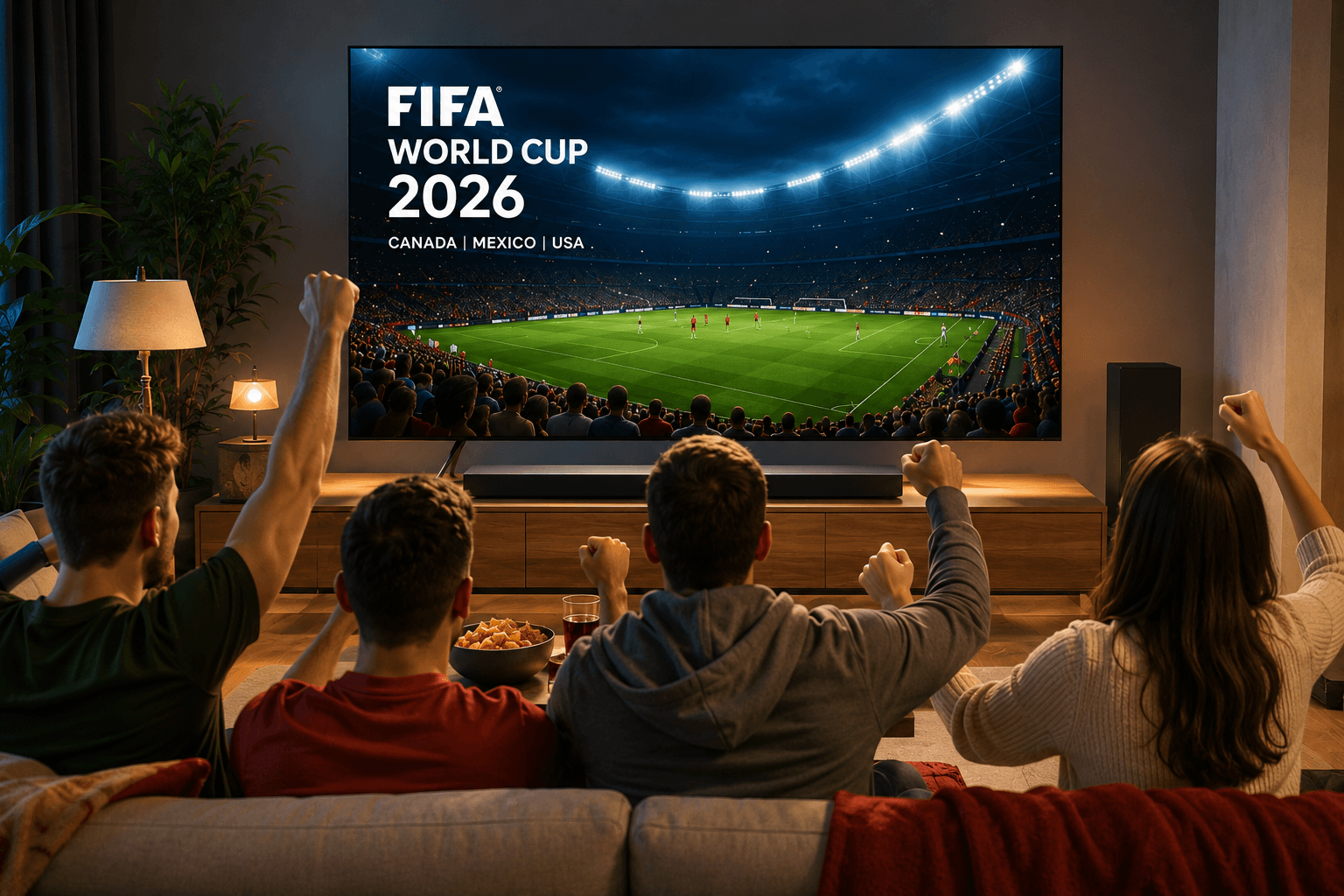
The expanded format means 104 matches played across an extended schedule, involving more nations and generating longer periods of sustained audience attention. For European markets in particular, evening and late-night kick offs create a viewing pattern that aligns directly with peak television consumption in the home. At a time when many forms of media are becoming increasingly individualised, the World Cup remains one of the few truly collective viewing experiences left.
That distinction matters enormously for consumer electronics brands, particularly those operating within the television category. Few sectors are so closely connected to the cultural moment itself. The World Cup remains one of the last truly universal live viewing events, consumed simultaneously across generations, countries and communities in real time. It connects people within households, friendship groups and wider society in ways very few other media experiences still can.
In many respects, television still creates culture at a scale unmatched elsewhere in media.
Despite years of viewing fragmentation, the television set itself continues to occupy a uniquely important role within the home. Consumers may consume content across multiple devices throughout the day, but premium live events still draw audiences back toward the biggest screen available. The emotional significance of major sporting tournaments elevates the importance of viewing quality in a way few other forms of content can replicate.
That creates a particularly powerful commercial dynamic for television manufacturers. The replacement cycle for large-screen TVs often aligns naturally with major football tournaments such as the World Cup and European Championships. Consumers who may have delayed upgrading their home entertainment experience suddenly reconsider the role of screen quality, picture performance and immersive viewing within the living room environment.
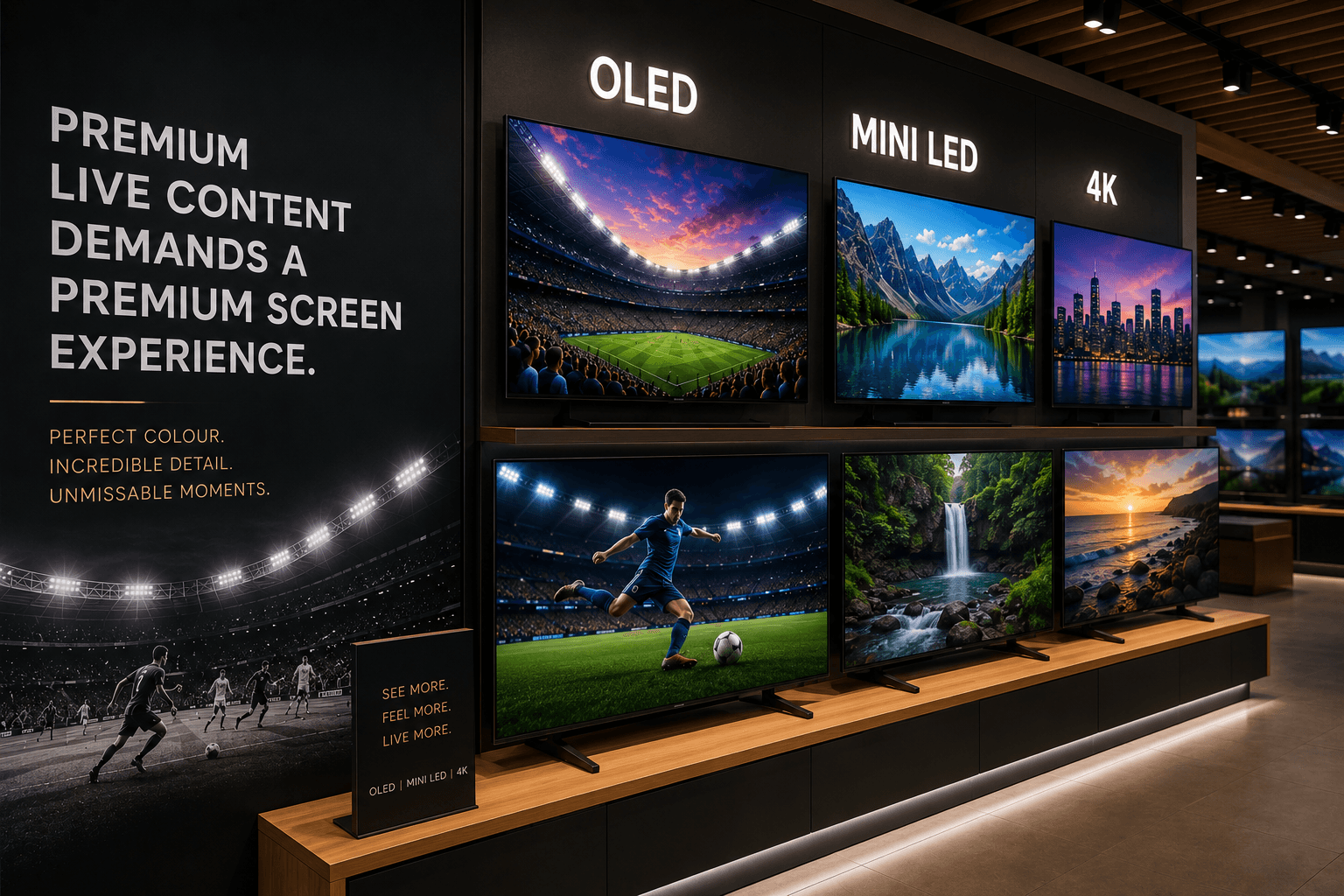
Premium live content demands a premium screen experience.
Historically, this created relatively predictable commercial conditions. Brands invested heavily in above-the-line awareness campaigns, retail partners activated promotional activity around tournament periods, and increased consumer demand lifted the category more broadly.
But the conditions for winning those moments have changed significantly.
The Collapse of the Linear Consumer Journey
The modern consumer journey no longer follows a linear path from awareness to purchase. A viewer may see a television advert during a live match, research products through retailer platforms later that evening, encounter creator reviews on social media the following morning, compare specifications through AI-generated recommendations, and complete a purchase days later after being retargeted through retail media environments.
The distance between inspiration, consideration and conversion has compressed dramatically, while the number of touchpoints influencing decision-making has expanded.
As a result, the brands most likely to outperform during World Cup 2026 will not necessarily be the ones with the biggest campaigns or the loudest media presence. Increasingly, success depends on how effectively brands connect media, retail, performance marketing, shopper strategy and operational agility into one integrated commercial system.
That shift is changing the role of brand salience itself.
For many years, salience was primarily associated with awareness and mental availability. During major sporting events, the objective was straightforward: dominate attention and remain memorable within the category. While that principle still matters, salience now behaves differently because consumers encounter brands across such a wide range of environments and contexts.
A television brand is no longer judged solely by a hero film or sponsorship presence. It is judged by the consistency of its presence across retailer platforms, review ecosystems, marketplace listings, social content, recommendation engines and increasingly, AI-generated responses. Consumers now build impressions cumulatively, through hundreds of interconnected signals rather than a single campaign narrative.
This creates a much greater need for coherence across the entire ecosystem. Not identical creative, but consistent meaning. The brands that perform most effectively are often those capable of maintaining clarity of proposition regardless of where the consumer encounters them, whether that is through a retailer homepage placement, a comparison article, a YouTube review or a conversational AI recommendation.
At The One Off, this principle has been shaped by more than two decades of working with brands in complex retail environments, and over ten years helping establish and steadily grow Toshiba’s television market share within one of the world’s most competitive consumer electronics categories. Driven particularly through online retail growth, Toshiba’s market share has at times approached 10% within key retail environments despite operating against significantly larger global competitors.
That growth has relied on building connected strategies across retail partnerships, cultural moments, entertainment licensing, brand campaigns and always-on conversion activity rather than relying on isolated campaign bursts alone.
More recently, that thinking has culminated in the development of Shopper Sphere - a connected planning & activation model designed to bring media intelligence, creative systems and shopper insight together within one integrated framework. The objective is to ensure retail expertise is embedded within both central strategy and campaign activation from the outset, rather than applied retrospectively.
That connected approach has already demonstrated significant impact within the consumer electronics category. Recent entertainment-led campaign activity for Toshiba delivered the brand’s largest and most cost-efficient ATL campaign to date (Seeing Is Believing 2025), alongside a five-point increase in brand consideration and promotional campaign ROAS reaching up to 20x. Crucially, each element was designed not to operate independently, but as part of one connected commercial ecosystem.
Ahead of Euro 2024, Toshiba deployed an integrated campaign spanning long-form film, media partnerships, social, performance and retail media, centred around England breakthrough star Cole Palmer. The campaign preceded one of Toshiba’s strongest share months to date, despite operating at a comparatively modest budget relative to larger global competitors.
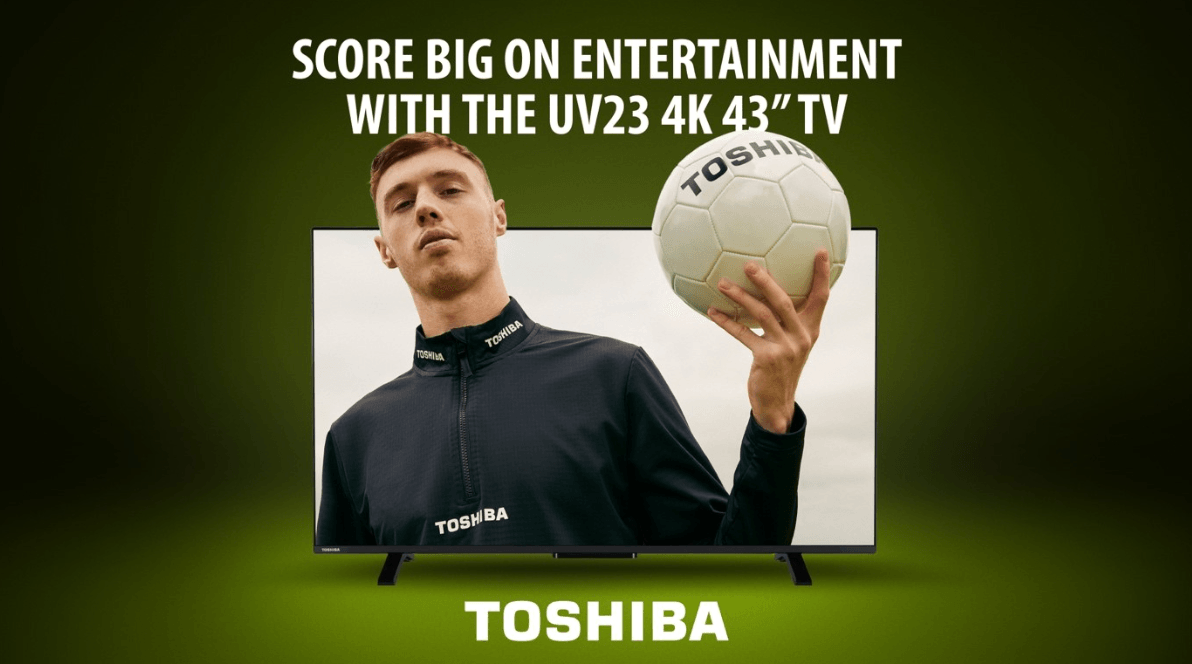
Analysis conducted during and after the Cole Palmer campaign revealed that different creative executions influenced audiences differently across stages of the purchase journey. In particular, conversion campaigns driving audiences toward retail product detail pages showed a c.50% uplift in propensity to view product among audiences previously exposed to the Cole Palmer creative before later encountering Toshiba’s visually differentiated product-focused Gradient execution.
The insight reinforced an increasingly important principle within modern integrated planning: different creative assets perform different strategic functions across the consumer journey, and effectiveness often depends not simply on individual execution quality, but on how those assets work together sequentially.
Those learnings are now shaping Toshiba’s World Cup 2026 activity as the media and retail landscape continues to evolve.
Retail Media Has Changed the Planning Model
One of the most significant shifts since the last World Cup has been the rapid growth and maturity of retail media and commerce media ecosystems.
Retailers are no longer simply distribution partners. They are now media owners, audience platforms, data environments and increasingly, highly influential points of brand discovery and decision-making. The level of transactional insight now available through retail media environments has fundamentally changed how brands approach campaign planning, optimisation and measurement.
For planners preparing for World Cup 2026, that evolution matters enormously.
Many teams are already analysing audience behaviour and retail performance data from Euro 2024 in order to model likely patterns around the upcoming tournament. That process extends far beyond simple conversion analysis. Brands are increasingly considering how retail demand fluctuates based on tournament progression, national team performance, regional audience sentiment, retailer priorities and wider shopper behaviour.
The dynamics are highly fluid.
Markets whose national teams progress into the latter stages of tournaments often experience secondary waves of television demand as audience engagement intensifies. Product priorities can shift rapidly. Retailers may require last-minute changes to promotional focus or creative emphasis depending on stock availability and sales momentum.
In this environment, responsiveness becomes commercially critical.
Performance media has therefore evolved beyond its traditional role as a lower-funnel conversion mechanism. Increasingly, it functions as a live intelligence system that reveals where demand is emerging, which retailers are converting most effectively, what messaging is resonating, and how audience behaviour is changing in real time.
The strategic value lies not simply in efficiency metrics such as ROAS or CPA, but in the speed and quality of the feedback loop itself.
Retail signals can now influence broader communications planning while campaigns are still live. Audience behaviour within commerce environments can shape creative prioritisation, promotional focus, media weighting and product messaging dynamically throughout the tournament period.
That creates a far more adaptive communications model than many traditional campaign structures were designed to support.
Many of these themes are now becoming central industry conversations. Discussions at last week’s Criteo Cup event at Stamford Bridge, hosted by Criteo, reflected just how rapidly retail media and commerce planning are evolving ahead of World Cup 2026. Conversations between brands, retailers and commerce media specialists increasingly centred not on isolated channel performance, but on how organisations connect audience insight, retail responsiveness, creative agility and measurement into one coordinated commercial strategy.
Why Operational Integration Now Matters More Than Campaign Scale
This level of responsiveness places increasing pressure on operational integration between teams.
Historically, media planning, creative development, shopper marketing, retail activation and analytics often operated as relatively separate disciplines with distinct timelines and workflows. But compressed retail moments such as the World Cup expose the limitations of those silos very quickly.
Creative and media teams now need to operate in constant alignment. Retail requirements can change daily, sometimes hourly, during major tournament periods. Product availability fluctuates. Retail priorities evolve. Audience sentiment shifts depending on match outcomes and national engagement.
Technology and AI-assisted reversioning tools are improving production agility considerably, but they do not replace the need for experienced human judgement. Maintaining brand standards, understanding what quality looks like across different environments and making intelligent creative decisions at speed still requires close collaboration between skilled specialists.
The strongest campaigns are increasingly those where media, retail and creative teams operate with shared visibility and continuous communication rather than sequential handoffs.
This is also reshaping the relationship between agencies and clients themselves.
Many brands still operate with multiple specialist partners managing different aspects of the communications ecosystem independently. While specialist expertise remains valuable, fragmented structures often create operational friction that becomes highly visible during fast-moving commercial periods.
Communication slows. Creative consistency weakens. Performance insights fail to influence wider strategy quickly enough. Opportunities are missed while teams navigate process complexity rather than responding to live market conditions.
Increasingly, the value of an integrated advertising approach lies not simply in offering multiple services, but in creating operational cohesion between disciplines that traditionally operated separately.
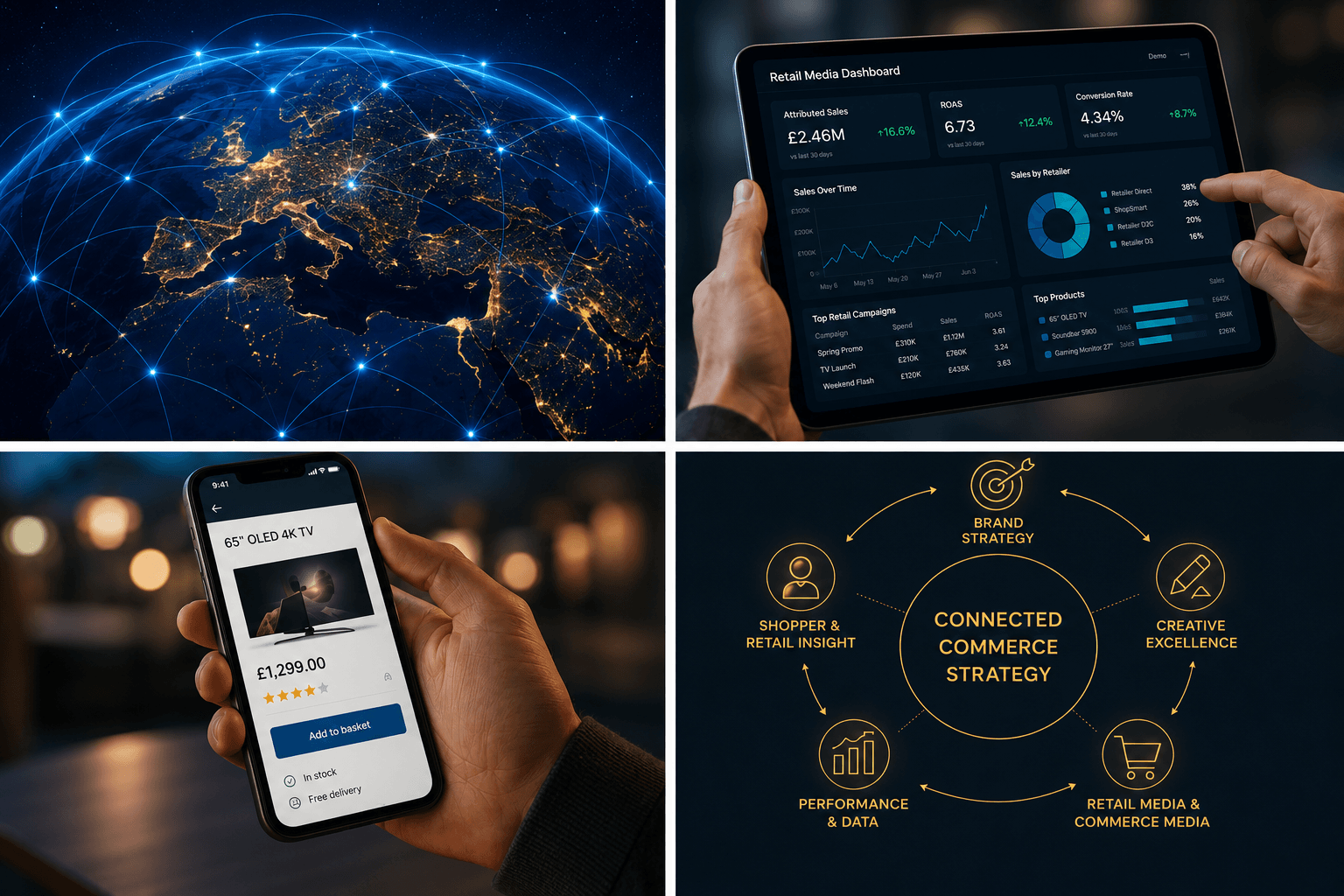
At The One Off, that reflects a belief that retail, commerce media, creative and brand strategy can no longer be considered independently from one another. They influence each other continuously throughout the consumer journey and therefore need to be planned together within one connected framework.
You can learn more about The One Off’s approach to integrated advertising, creative strategy and connected brand and commerce planning through its wider What We Do offering.
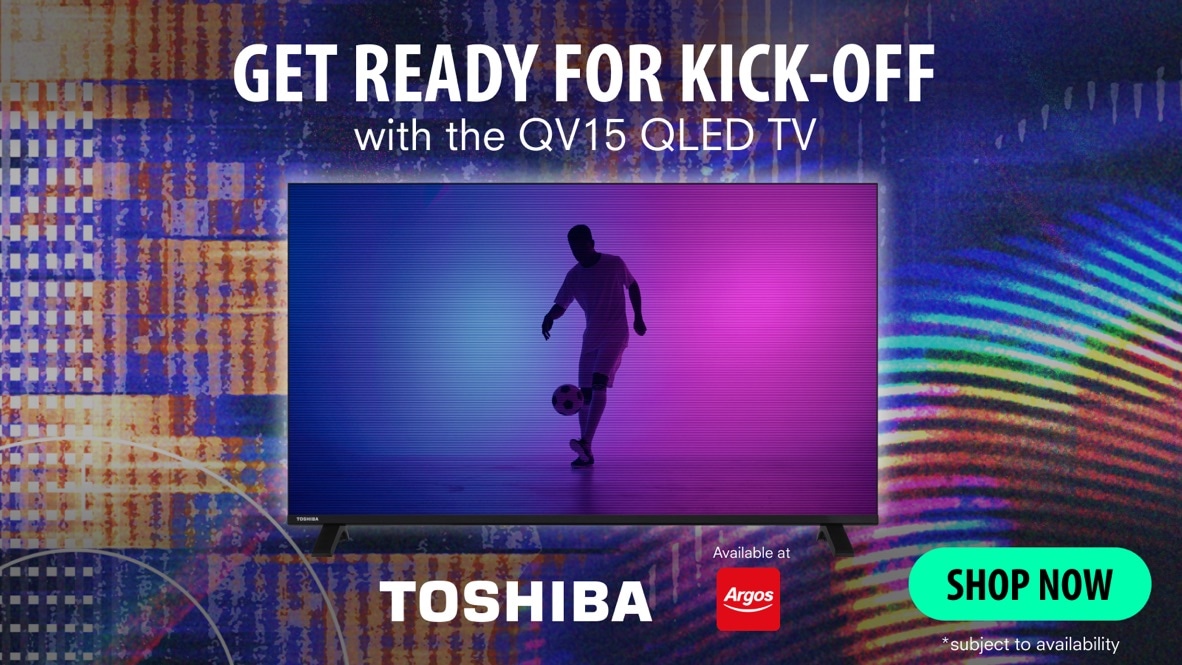
Toshiba’s distinctive World Cup 26 campaign rolls out pre-tournament across media through to retail partners.
Retail Media Cannot Work Alone
The growing importance of retail media has understandably attracted enormous industry attention in recent years. The accountability it offers is compelling. Granular transaction-level data and increasingly sophisticated attribution models provide marketers with visibility that was previously difficult to achieve at scale.
But there is also a growing risk that brands over-prioritise lower-funnel activity at the expense of the wider ecosystem supporting it.
In many respects, retail media resembles the role of a striker within a football team. The goals may ultimately define the outcome, but those goals only happen because an entire system exists behind them creating opportunities, building momentum and providing the structure and stability needed to remain competitive throughout the game.
The same principle applies within modern marketing.
Retail media conversions are often the visible commercial outcome, but they are heavily influenced by the quality of brand building, creative consistency, audience understanding and strategic planning taking place across the broader consumer journey.
This becomes particularly important as AI-assisted discovery begins reshaping how consumers research and evaluate products.
Increasingly, audiences are not simply searching for products in traditional ways. They are asking questions conversationally through AI interfaces and recommendation systems:
“What is the best TV for watching football?”
“Which OLED performs best for sports?”
“What is the best gaming TV under £700?”
The answers consumers receive are shaped not simply by advertising presence, but by the totality of information available across retailer platforms, review environments, publisher content, product data, customer sentiment and broader digital visibility.
This is where Generative Engine Optimisation, or GEO, is likely to become increasingly important over the coming tournament cycle.
Authenticity, consistency and connected brand presence across the wider ecosystem will matter more than ever. The brands that succeed will not simply be those investing aggressively in retail media, but those capable of supporting the entire consumer journey cohesively from awareness through to conversion and advocacy.
Winning the World Cup Season Requires Connected Systems
Ultimately, World Cup 2026 will not simply be a test of campaign scale or media investment. It will be a test of operational integration.
The brands most likely to succeed will be those capable of connecting brand building with retail execution, performance intelligence with creative agility, and strategic planning with real-time commercial responsiveness.
In many respects, the tournament represents a stress test for the modern communications model itself.
That matters because major cultural moments no longer reward isolated excellence within individual channels. They reward connected systems capable of adapting continuously across the full consumer journey.
For consumer electronics brands, particularly within the television category, the opportunity remains enormous. The World Cup still creates cultural attention at a scale very few events can match. Television still retains a unique role within shared viewing experiences. Retail demand will continue to accelerate around tournament cycles.
But increasingly, winning those moments depends less on producing the biggest campaign and more on building the most connected commercial ecosystem around it.
And that may ultimately be the defining characteristic of modern marketing altogether.