Mall of Asia
Luxury-led visitor experience

We designed a sophisticated wayfinding system for Bengaluru’s Mall of Asia, blending intuitive navigation, architectural integration and digital touchpoints to create a seamless, luxury-led visitor experience across the destination.
The Problem
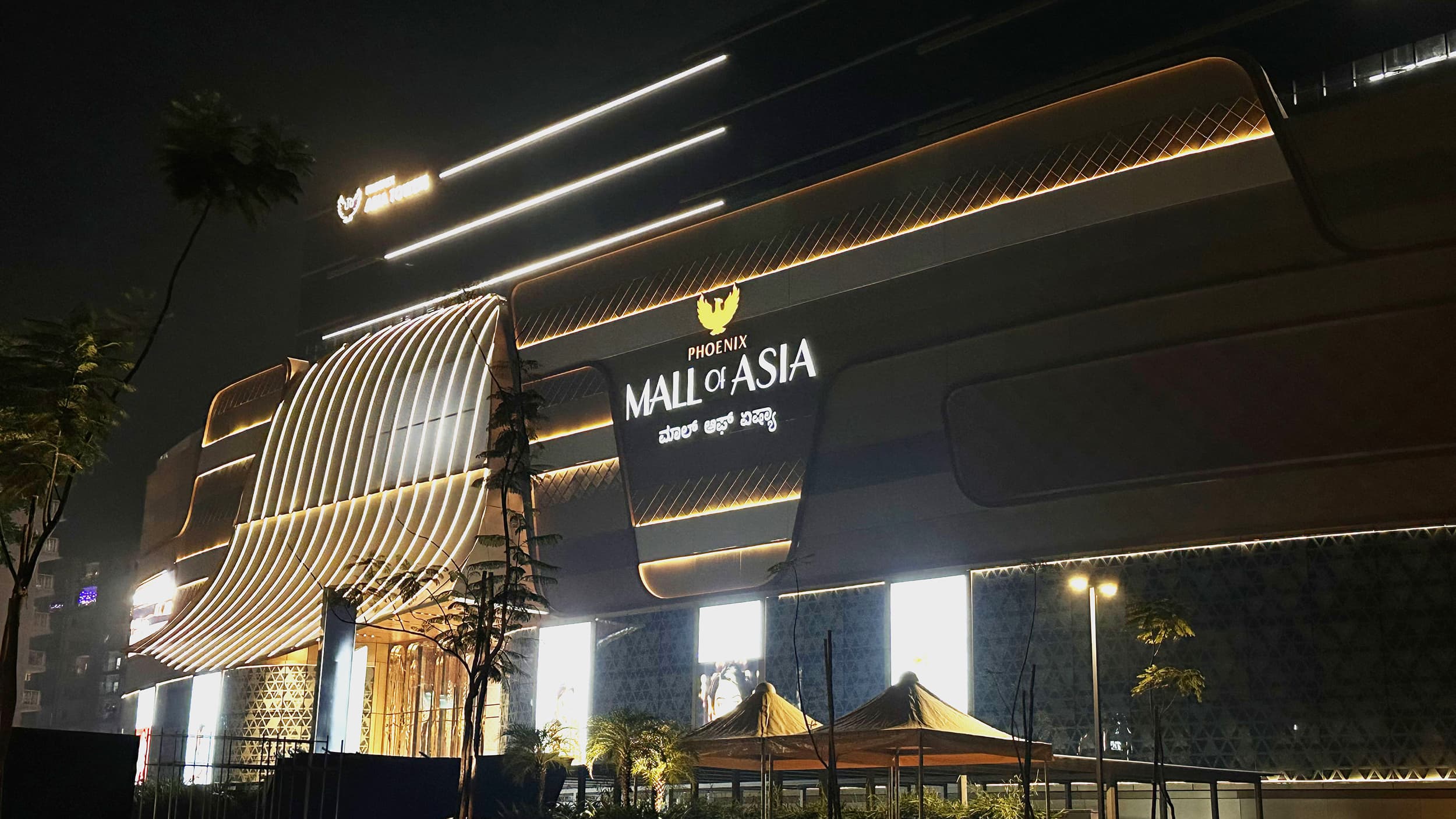
Located in one of Bengaluru’s fastest-developing neighborhood's, the Mall of Asia was envisioned as a new-age retail destination that breaks down boundaries between retailer and customer, creating a more inclusive, informative, and collaborative lifestyle experience. Spanning over 13 acres with 1.2 million sq. ft. of retail space, the development brings together retail, leisure, office, and public environments within a single expansive destination.
The challenge was to design a comprehensive wayfinding system that could unify these diverse zones including entrances, lobbies, parking, podium levels, and retail concourses into a seamless visitor journey, while elevating the mall’s botanical and opulent atmosphere. Navigation needed to feel intuitive and effortless, without compromising the mall’s modern, luxury-led character.
The Solution
Our design approach sought to enrich the mall’s botanical and opulent character while making movement feel natural, effortless, and inherently intuitive. Rooted in the philosophy of natural wayfinding, the system draws inspiration from how people instinctively orient themselves through cues in their environment.
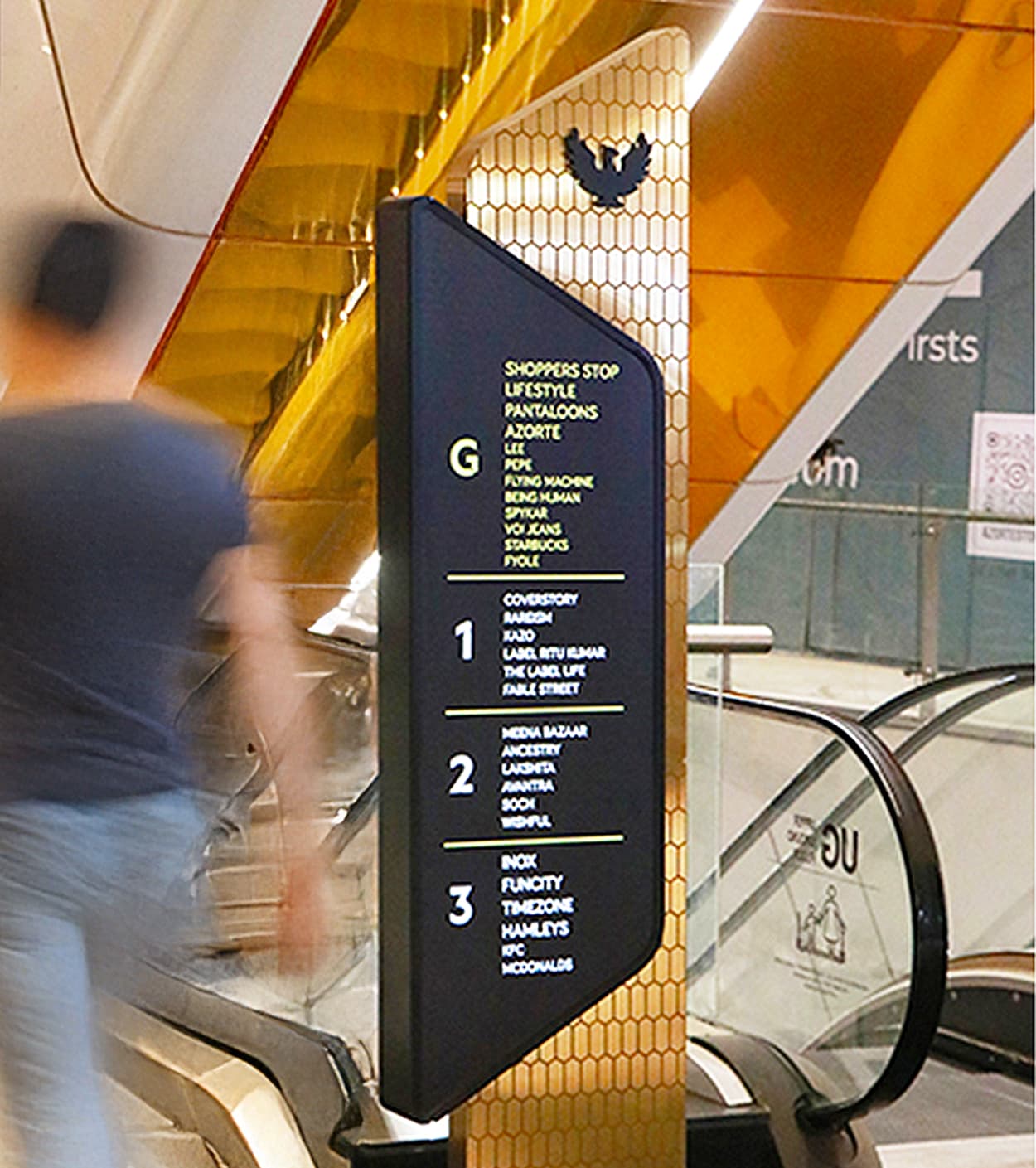
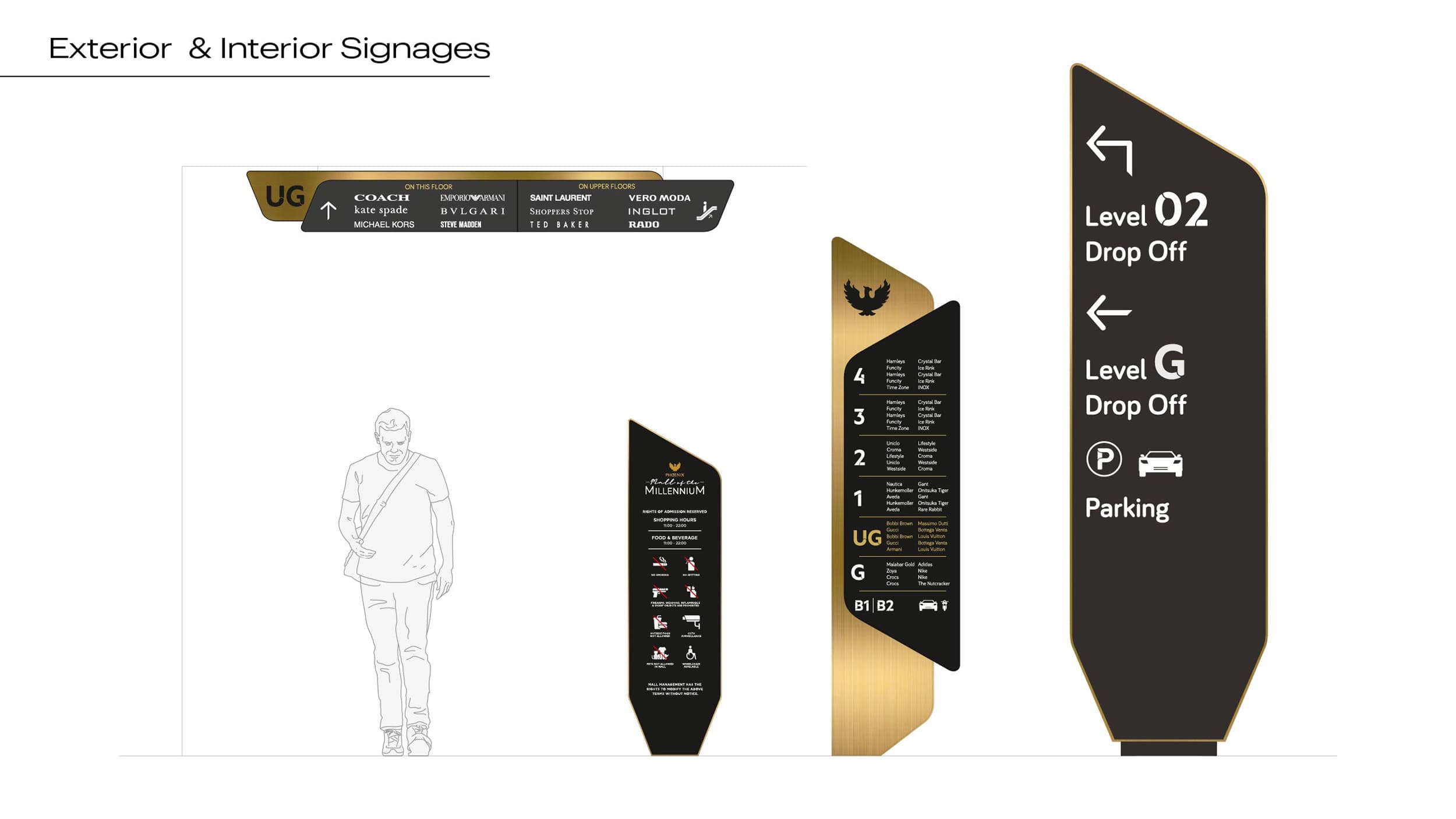
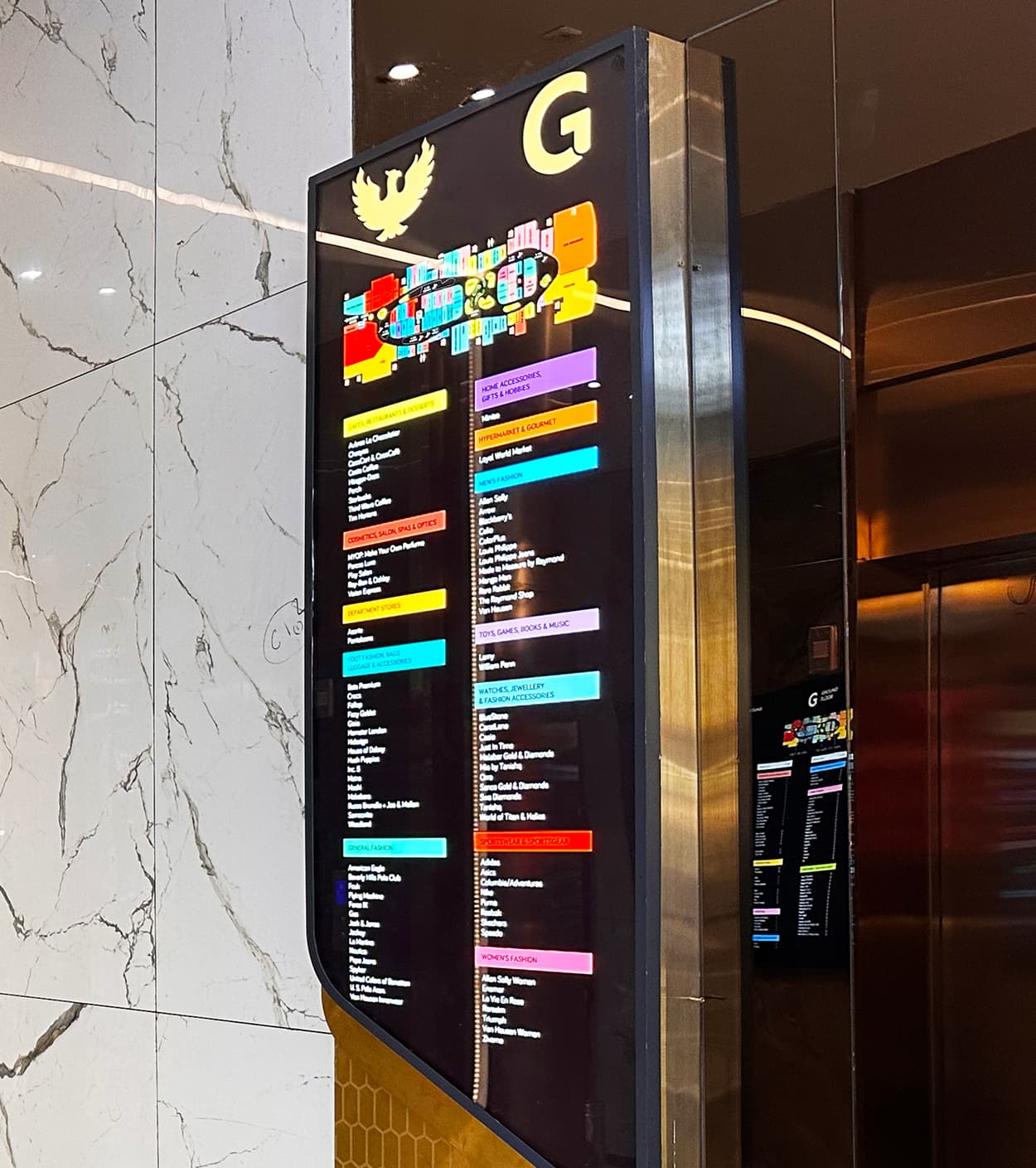
We developed a clear visual and spatial hierarchy that familiarises visitors with the building through intuitive zoning, simplified nomenclature, and strong vertical visibility across multiple levels. The visual language draws directly from the mall’s interiors — luxurious gold-finished steel, glass panels, textured detailing, curved forms, and crafted patterns — creating signage that integrates seamlessly into the environment while still commanding attention.
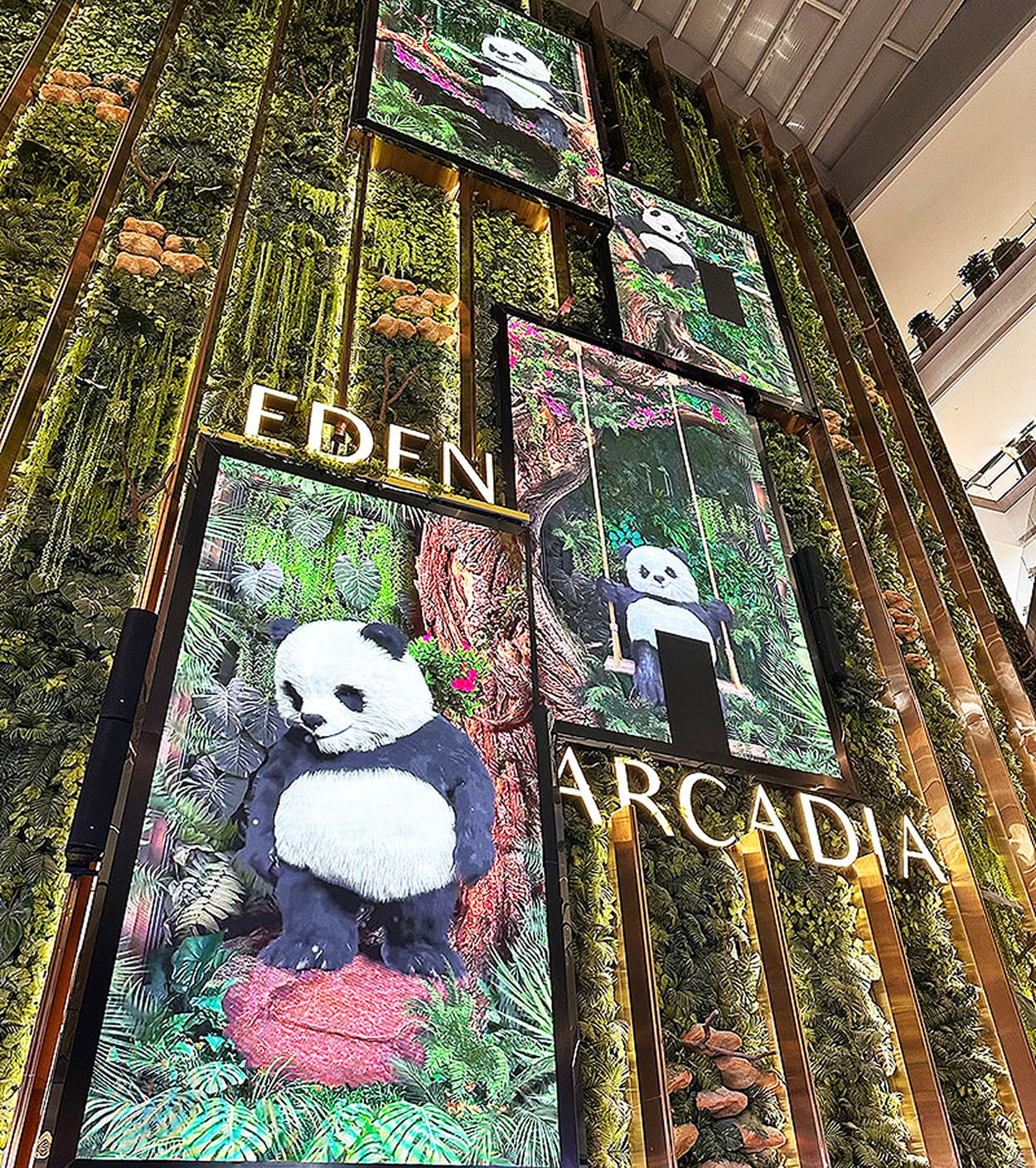
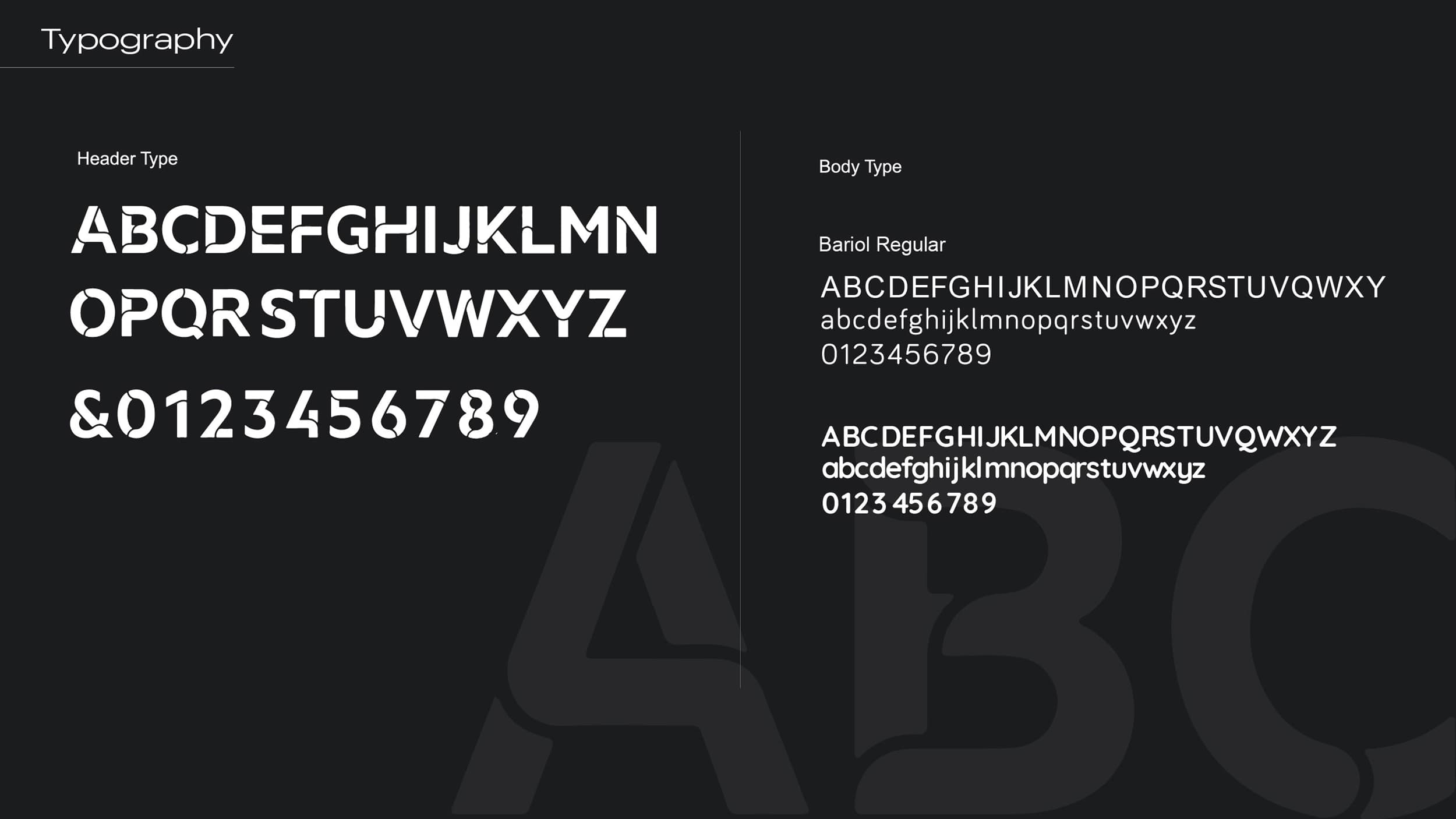
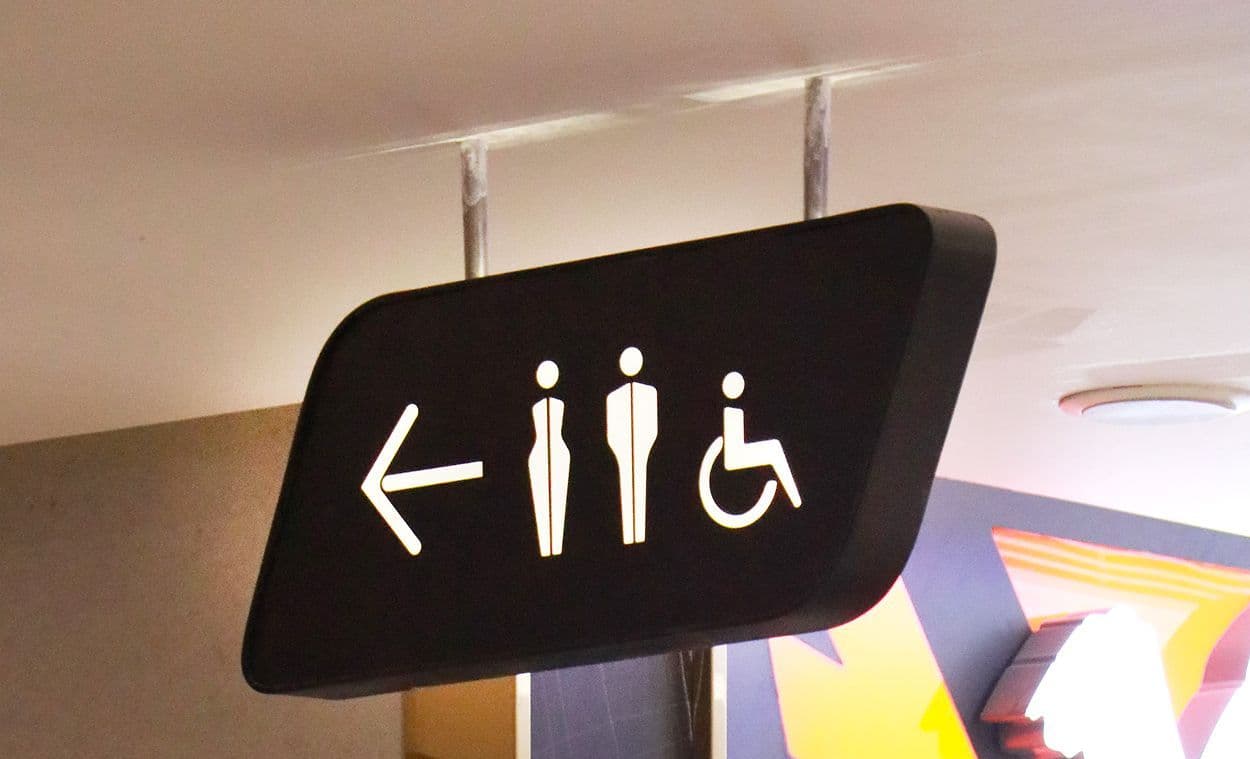
Technology was introduced as a subtle enhancement rather than a distraction. Digital directories, interactive displays, and lighting cues support discovery and navigation without overwhelming the space. A cohesive iconography system, combining refined typography, colour cues, and custom-designed icons; anchors the entire visual language and allows information to be understood at a glance.
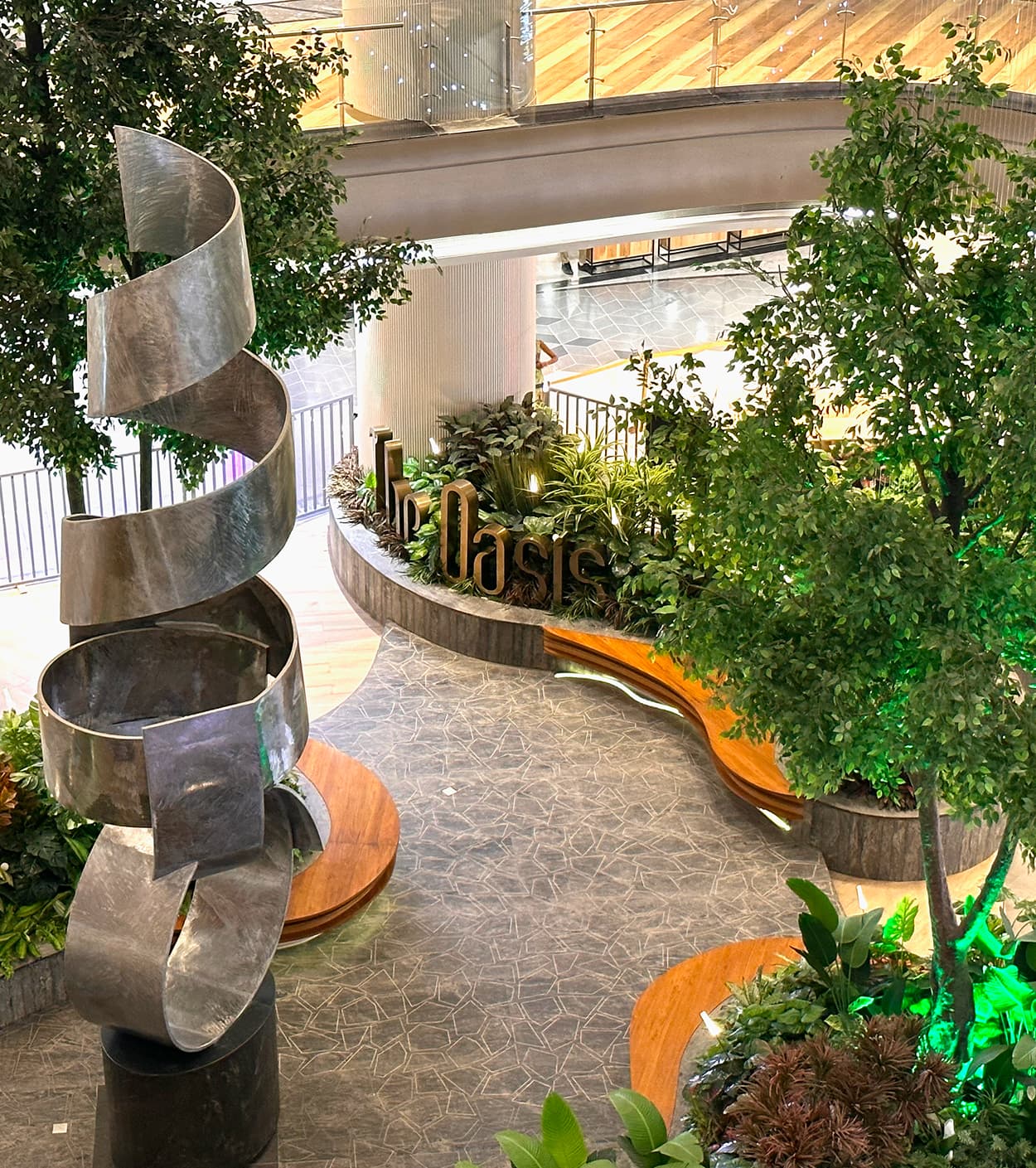
To create memorable destinations within the mall, a zoning system was developed through circulation studies, transforming key areas into identifiable landmarks. These experiential zone markers, enriched through materiality, illumination, and expressive forms, not only improve wayfinding but also act as visual anchor points and social moments within the space.
The result is a wayfinding system that feels organic yet precise, sophisticated yet human, and adaptable enough to be implemented across the wider Phoenix portfolio.
The Result
The new wayfinding design transforms movement into an experience of ease and elegance. Visitors can now navigate confidently through clearly defined zonal destinations, with every signage element reinforcing the mall’s botanical-luxury narrative. By blending intuitive spatial orientation with subtle technological enhancements, the system delivers both clarity and character, turning wayfinding into an integral part of the Mall of Asia’s immersive retail journey.
It's modular structure and refined material language have also enabled the system to be standardised and rolled out across other Phoenix Properties destinations, including Mall of Millennium, Pune, and Phoenix Palladium, Mumbai, ensuring consistency across the developer’s wider retail ecosystem.
Awards
- VMRD Retail Design Awards 2024 - Merit - Retail Graphics & Communication
Sector
Wayfinding